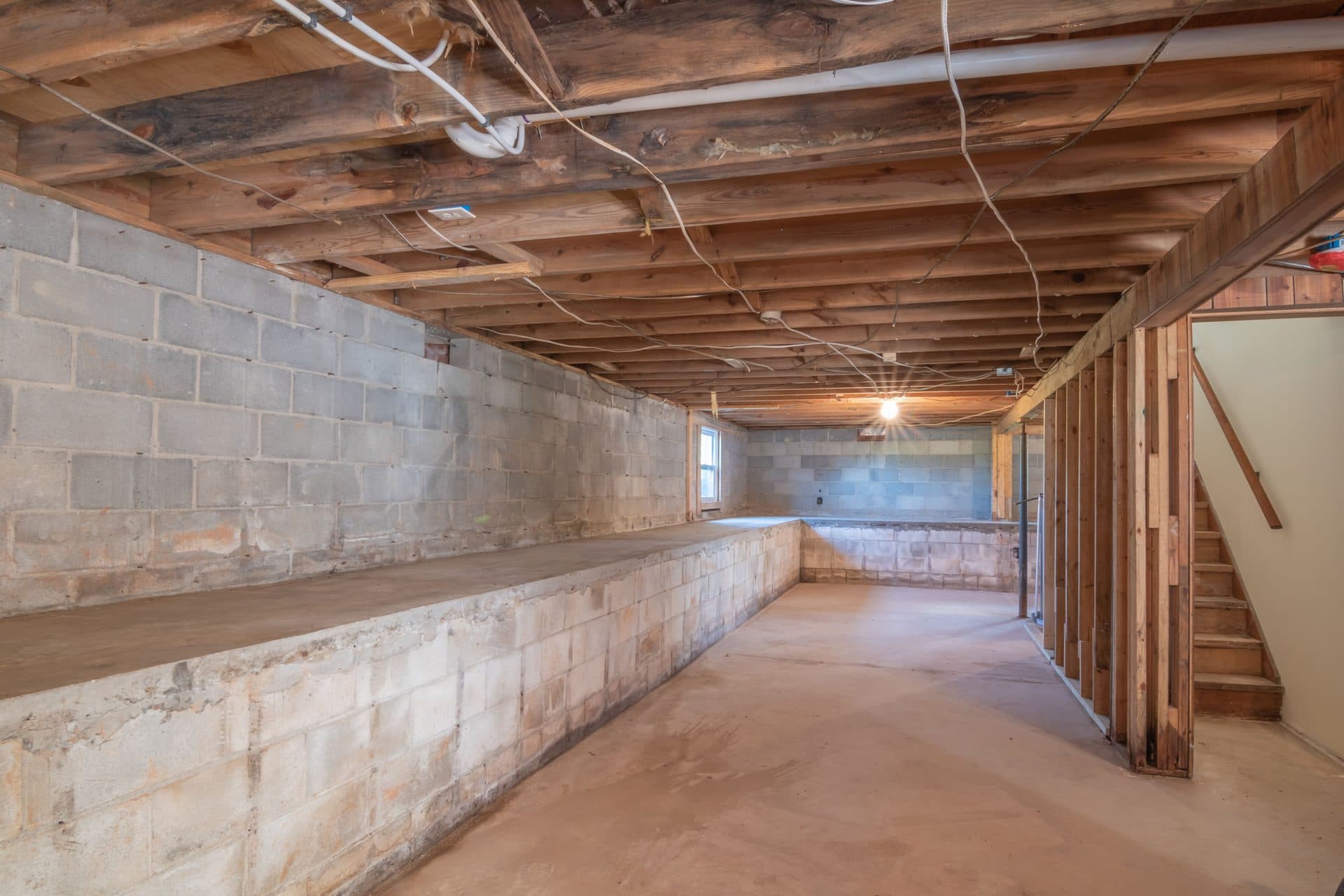
Musty Smell in the Basement
What the smell is actually telling you, how to tell the causes apart, and which ones are worth a call. Most of them are not, and one of them very much is.
What musty actually is
That smell is moisture. Specifically, it is what damp porous material gives off: wet concrete block, a slab that never fully dries, old wood, cardboard boxes, carpet padding, the paper facing on drywall. Mold and mildew grow in those conditions and add to the smell, but the smell starts with the damp, not with the mold. That distinction matters because it tells you what to fix.
Basements around Jamestown smell musty more than most. The housing stock is old, the walls are stone or early block that hold water like a sponge, and the valley soils keep the ground around the foundation wet for long stretches of the year. A musty basement here is common. That does not make it harmless. It means something in the basement is wet, and the question is what.
The five causes, and how to tell them apart
Condensation, the most common one
Warm humid air meets cold below-grade walls and floors, and the moisture in the air condenses on them. The tells: the smell is worse in summer and after humid spells, pipes and windows sweat, the walls feel cool and clammy but there is no water on the floor, and it happens whether or not it has rained. This is an air problem, not a water problem. A basement dehumidifier sized for the square footage, and keeping windows closed on humid days, usually handles it. This is also the case where a waterproofing system would be the wrong thing to buy.
Water coming through the foundation
The one that matters. Groundwater rising under the slab or pushing through the walls keeps the block and floor wet from the outside, and no dehumidifier can keep up with it. The tells: damp patches or dark staining low on the walls, white chalky residue on block, a floor that is wet in a line along the wall after a wet stretch, a dehumidifier that fills every day and never gets ahead, and a smell that tracks the weather outside rather than the humidity inside. If you see any of these, the smell is the least of it. Our wet basement repair page walks through where that water gets in and what stops it.
A slow plumbing leak
A drain line seeping under the slab, a supply line dripping inside a wall, a water heater weeping at the base. The tells: the damp is in one spot rather than along a wall, it does not care about the weather, and it is often near a fixture or a pipe run. A plumber's problem, and worth ruling out before anyone talks about the foundation.
Sewer gas
Not musty, exactly, but people describe it that way. It smells like rotten eggs or drains, and it usually comes from a floor drain whose trap has dried out or a basement fixture that has not been used in months. Pour a bucket of water down every floor drain and unused fixture. If the smell fades in a day, that was it.
Something dead in a wall or under the floor
Sharp, sweet, and localized, and it gets worse for a week and then fades over a month. Unpleasant, not a moisture problem, and not something we fix.
What to try before you call anyone
Get the cardboard off the floor and the carpet off the slab, because both hold damp and both smell. Run a real dehumidifier, the kind rated for basements, and see whether it keeps up. Empty it daily for a week and note how much it pulls. Check the outside: downspouts dumping at the foundation, a yard that slopes toward the house, and window wells full of leaves all put water against the wall and are cheap to fix. Then look at the walls low down, in good light, for staining and residue.
If the dehumidifier gets ahead of it and the walls are clean, you had an air problem and you have probably solved it. If the dehumidifier cannot keep up, or the walls show the signs above, the moisture is coming through the foundation, and that is the point where a call makes sense.
What we can do about it
If the source is water coming through the foundation, the fix is stopping the water: sealing cracks, an interior french drain and sump system for groundwater, and drainage that lets wet block empty instead of holding water. If the source is air, the fix is humidity control sized for the basement, which we also do. Most of the time the first visit is a look and a straight answer about which one you have. Our basement waterproofing page covers the full set of what that can involve.
Musty basements, common questions
Is a musty basement smell always mold?
No, and this is the most common misunderstanding. Musty is the smell of damp: moisture sitting in porous materials like concrete block, wood, cardboard, and carpet. Mold needs that moisture to grow, so a musty basement often does have some, but the smell itself comes from the wet conditions, not necessarily from a mold problem. Fix the moisture and the smell goes with it. Leave the moisture and mold eventually follows.
How do I get rid of a musty smell in the basement?
Start with the cause, not the smell. If it is condensation, a dehumidifier sized for the space and better air movement usually solves it. If it is water coming in through the walls or floor, no amount of air treatment will keep up, and the fix is stopping the water. If it is a dead animal or a sewer gas issue, the smell is different and so is the fix. Sprays, candles, and open boxes of baking soda treat the symptom for a day.
Why does the smell get worse in summer?
Warm, humid summer air comes into the basement through windows, doors, and every gap in the house, and hits walls and floors that are much cooler because they are below grade. The moisture in the air condenses on those cold surfaces, the same way a cold glass sweats. That wets the block and the slab, and the smell follows. It is the single most common musty basement pattern around here and it often has nothing to do with water coming in from outside.
Will a dehumidifier fix it?
If the moisture is coming from the air, yes, a properly sized one will make a real difference, and the ones built for basements pull far more water than the small units sold for bedrooms. If the moisture is coming through the foundation, a dehumidifier runs constantly, fills every day, and the smell comes back the moment it stops. Which one you have is exactly what a first visit sorts out.
When should I call someone about it?
When the smell comes with any of these: visible damp patches or staining on the walls or floor, white chalky residue on block, water on the floor at any point during the year, a dehumidifier that cannot keep up, or the smell getting noticeably stronger over a season. Those are signs the moisture is coming through the foundation, and that is a waterproofing problem rather than an air problem.
Dehumidifier can't keep up?
That is the sign it's coming through the walls, not the air. Call and describe what you're seeing and smelling, and we'll set up a free on-site look.