Foundation Repair vs. Basement Waterproofing
They get sold as the same thing. They aren't. Here's how to tell which one your home actually needs, and when you genuinely need both.
The short version
Foundation repair is structural. It deals with cracks that weaken the wall, walls that bow under soil pressure, and parts of the house that have settled. Waterproofing is about moisture, keeping water out of the basement with drainage, sealing, sump pumps, and better grading. Strength versus dryness. Many homes need one. Some need both. Plenty get sold the wrong one.
What foundation repair actually fixes
Repair addresses movement and structural integrity: injecting and reinforcing structural cracks, stabilizing bowing walls with carbon fiber or anchors, lifting and supporting settled foundations with piers, and rebuilding deteriorated stone walls. The goal is a foundation that holds the house where it belongs and stops moving.
What waterproofing actually does
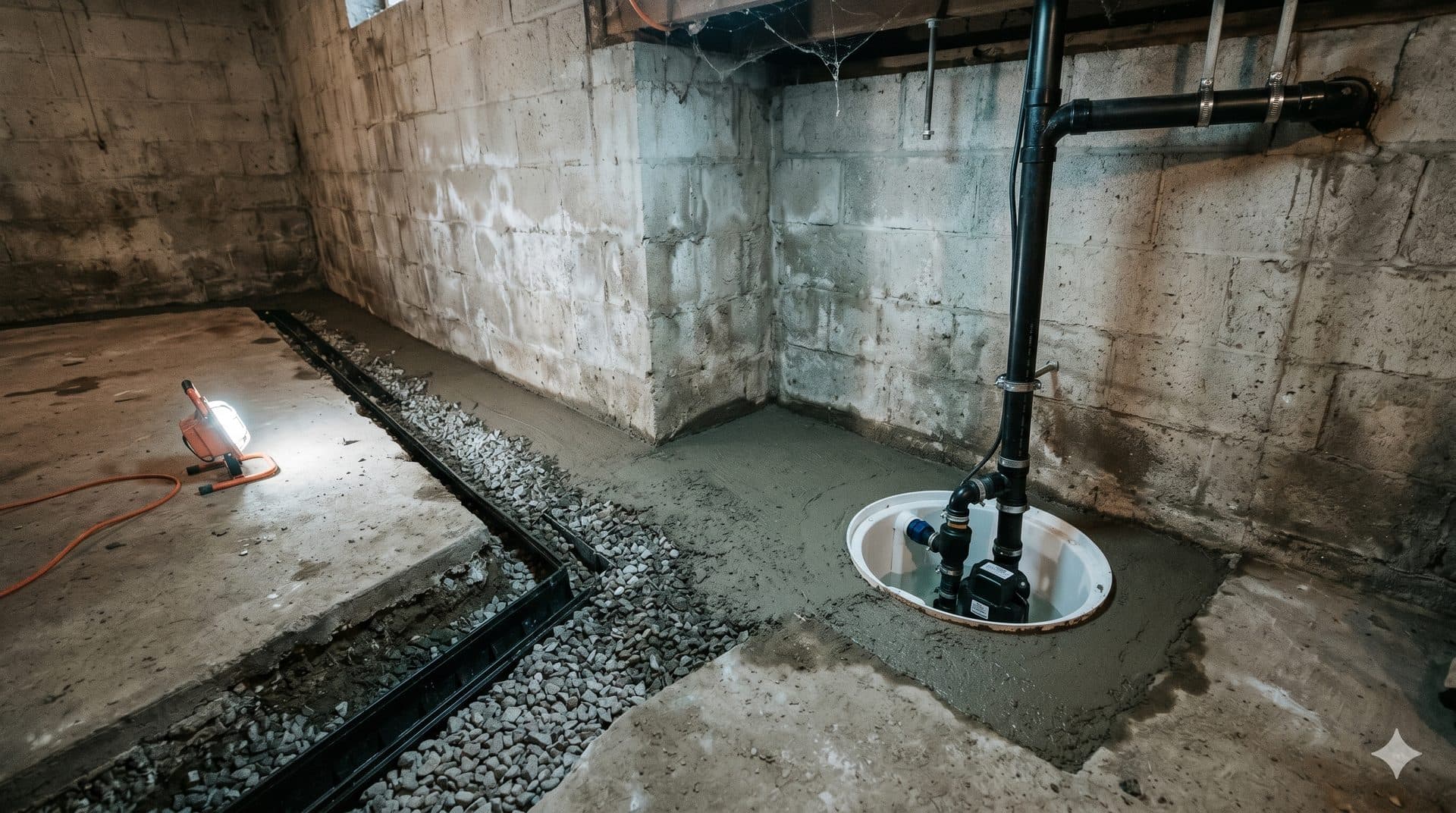
Waterproofing manages water that's already being kept out structurally but still finds its way in: interior or exterior drainage to route water away, sump pumps to remove it, sealing and vapor barriers, and grading and downspout work so water drains away from the house instead of toward it. A dry basement, not a stronger one.
Why the line blurs in our climate
Around Jamestown, the two problems feed each other. Water enters through a crack, then freezes in winter and widens that crack, so a moisture problem becomes a structural one. Clay soils hold water against the foundation and swell, adding the very pressure that bows walls. That's why a crack often needs both a structural repair and a drainage fix to truly stay solved.
The order matters
When you need both, structure comes first. Stabilize the wall, then handle the water. The expensive mistake is waterproofing and finishing a basement while the foundation is still moving, burying a growing structural problem behind fresh drywall. An honest evaluation tells you which problems you have before anyone recommends a system, and our goal is to recommend only what the wall in front of us needs.
Repair vs. waterproofing, common questions
What's the difference between foundation repair and waterproofing?
Foundation repair fixes structural problems (cracks that compromise the wall, bowing walls, and settlement) so the foundation carries the house safely. Waterproofing keeps water out of the basement using drainage, sealing, sump pumps, and grading. One addresses strength; the other addresses moisture. They overlap because water is often what causes the structural damage in the first place.
Do I need foundation repair or just waterproofing?
If you have cracks that are growing, walls that bow or lean, or floors that have settled, you need structural repair. Waterproofing alone won't stop movement. If the wall is sound but the basement gets damp or takes on water after storms, waterproofing is the answer. When a structural crack is also letting water in, you usually need both, done in the right order.
Will waterproofing fix a bowing or cracked wall?
No. Sealing or interior drainage will manage the water but does nothing for a wall that's moving. It can actually hide a worsening structural problem behind a finished, dry-looking surface. A bowing or cracking wall needs structural stabilization first; waterproofing comes after, if it's still needed.
Which should I do first?
Structure first, water second. Stabilize or repair the wall, then address drainage and moisture. Doing it the other way around risks paying to finish a basement that the foundation is still pushing apart. A proper evaluation sorts out which problems you actually have before anyone sells you a system.
Not sure which one you need?
Tell us what you're seeing (cracks, bowing, water, or all three) and we'll tell you straight whether it's a structural fix, a water fix, or both.