Bowing Basement Wall Repair in Jamestown, NY
A wall that's moving inward never moves back on its own. We stop it where it stands, with carbon fiber, anchors, or bracing matched to how far it's traveled.
How to tell if your basement wall is bowing
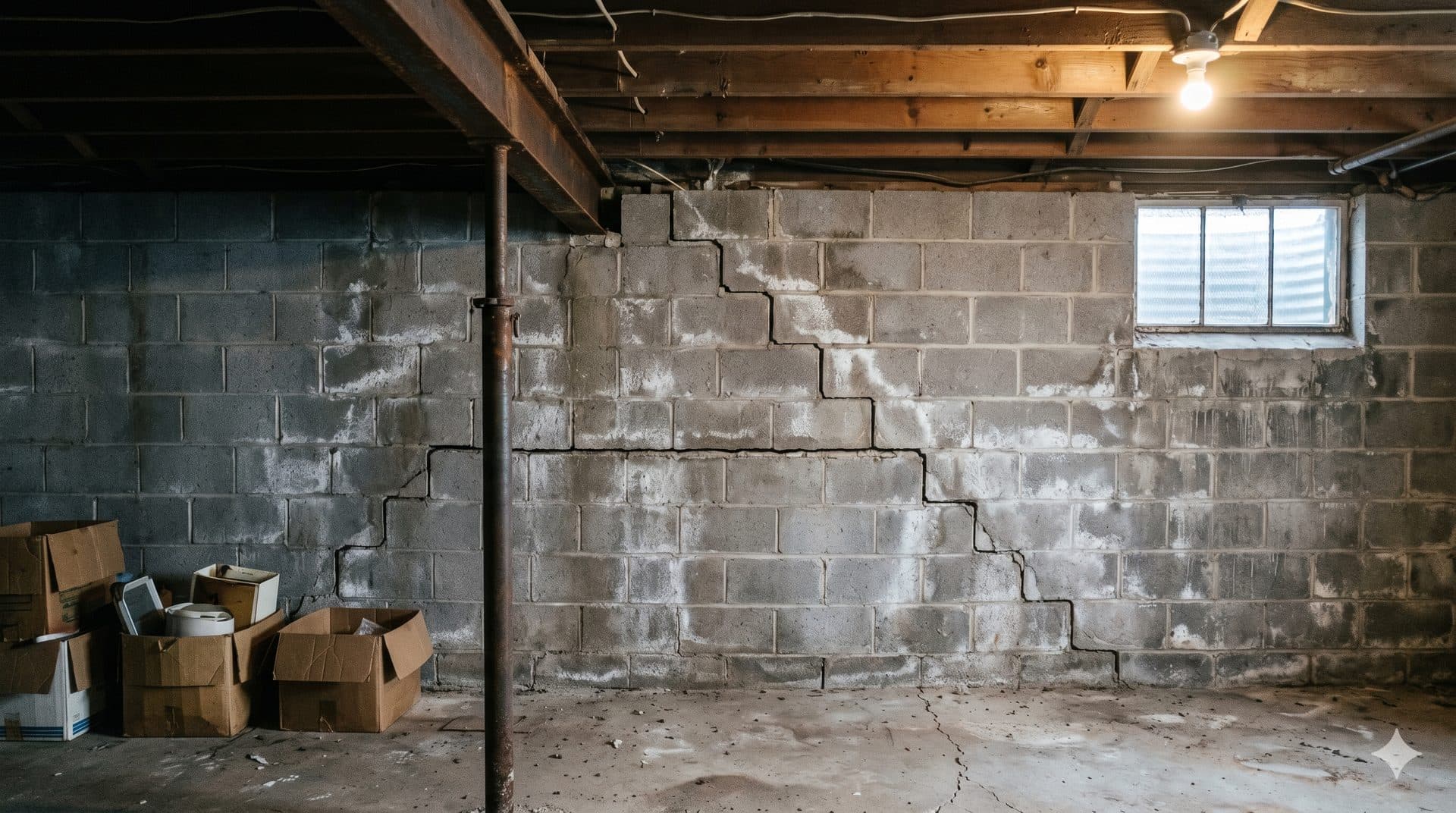
- A horizontal crack running along the middle courses of a block wall
- Stair-step cracking near the wall's corners
- The wall visibly bulges when you sight down it from one end
- The top of the wall has slid inward off the sill, or the bottom has kicked in
- Doors and framing above the wall going out of square
A flashlight held flat against the wall makes a bow obvious: the beam will pool in the bulge. If you can see movement with the naked eye, the wall has typically deflected an inch or more, still very fixable, but not something to leave for another winter.
Three proven repairs, matched to the movement
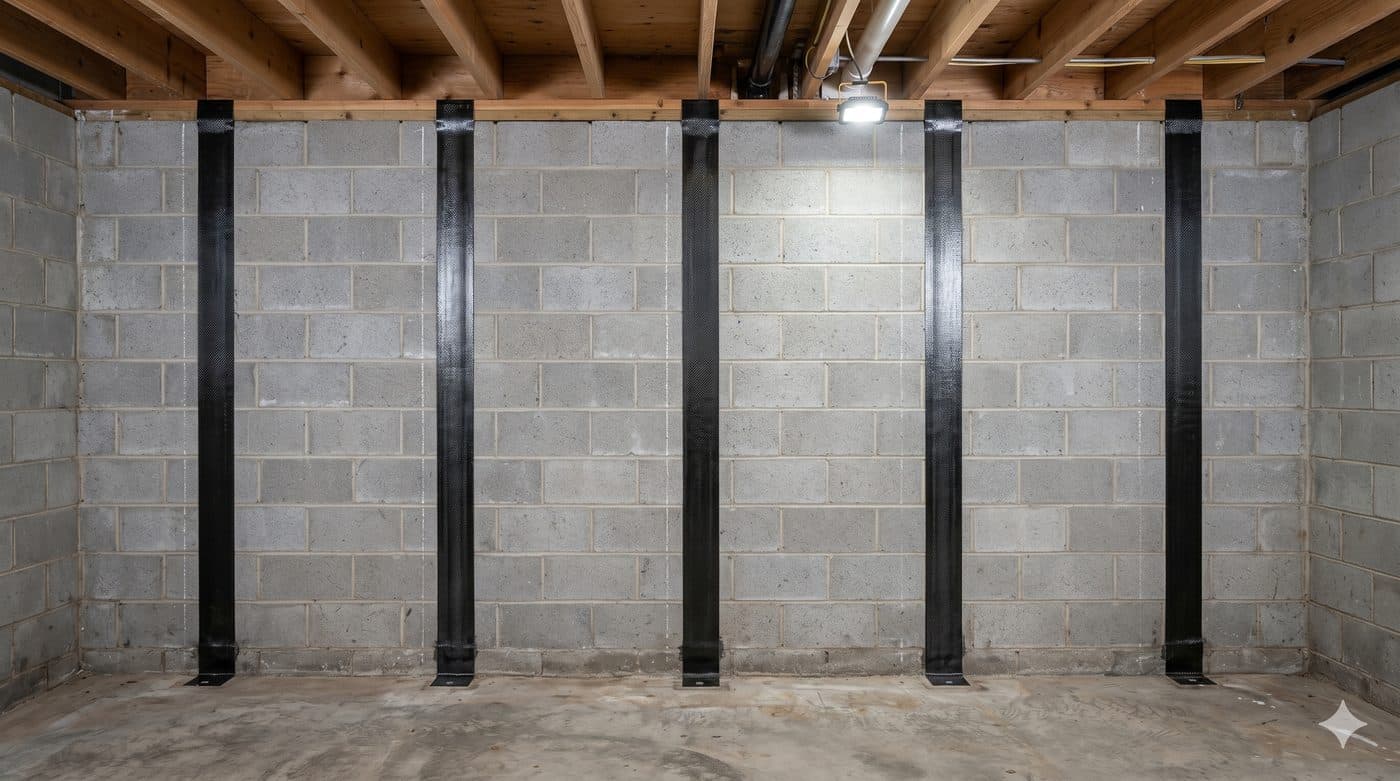
Carbon fiber straps, early-stage bowing (under ~2")
High-strength carbon fiber bonded to the wall face every few feet, tied into the footing and the floor framing. Stronger than steel by weight, nearly invisible after coating, and the most economical permanent fix when the wall is caught early.
Wall anchors, moderate bowing
Steel earth anchors set in stable soil beyond the foundation, connected through the wall to interior plates. Anchors both stop movement and can be tightened gradually to draw the wall back toward plumb over subsequent seasons.
Steel I-beam bracing, advanced movement or tight lots
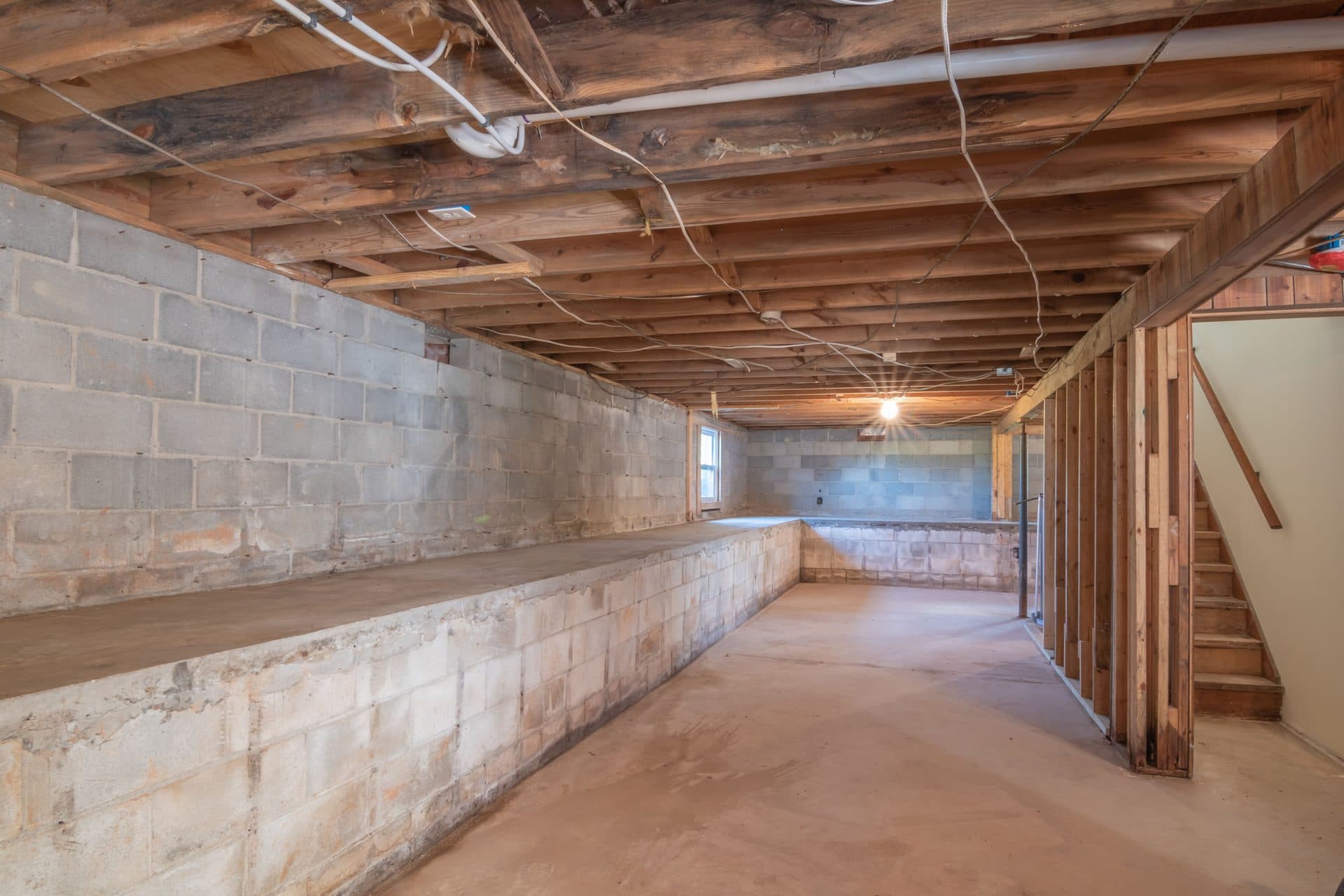
Vertical steel beams anchored to the slab and framing brace the wall from inside. That's the right choice where property lines, porches, or additions make exterior anchors impractical.
Why this is the most common structural repair in our area
The same lake-effect climate that fills Chautauqua Lake keeps our soils wet, and wet clay is what pushes walls in. Every freeze locks that pressure in ice; every thaw lets the soil swell further. Mid-century block foundations across Jamestown, Lakewood, and Falconer have spent 60-80 winters in that cycle. The walls aren't failing because they were built badly. They're failing because they've been pushed every year for decades. Stabilization ends the fight permanently. See our foundation repair service in Jamestown overview for how a wall assessment fits into a full first visit.
Frequently asked questions
How much does it cost to fix a bowing basement wall?
It depends on how far the wall has moved and the method it calls for. Carbon fiber reinforcement is the most economical option and works well for walls caught early; wall anchors and steel braces handle walls with greater movement; severe cases needing excavation or rebuild are the largest jobs. The earlier the wall is caught, the cheaper the fix, without exception. A free on-site look is the only way to get a real number.
What makes basement walls bow inward in Western New York?
Clay-heavy glacial soil absorbs water and expands, pressing against the wall. In winter, frost in the saturated soil adds even more lateral pressure. Block walls, the most common basement construction in mid-century Chautauqua County homes, resist vertical loads well but are weak against this sideways push, so they crack horizontally and slowly hinge inward.
Can a bowing wall be fixed without rebuilding it?
Usually, yes. Walls bowed less than about 2 inches are typically candidates for carbon fiber, which locks the wall in place. Walls with more movement can often be stabilized, and sometimes straightened over time, with anchors or braces. Rebuilding is the last resort for walls that have sheared or collapsed sections.
Wall moving? Get it assessed before winter.
We'll measure the deflection, explain exactly what's happening, and give you a written price to stop it, free.